
Last updated: September 2026
Pollen, humid air, and what your carpet does with both
Pollen and humid air work on a carpet in different ways, and around Chattanooga both are part of the year. The half of the pollen problem that is indoors settles into carpet, rugs and upholstery, and NOAA has September mornings at 90 percent relative humidity, so a carpet left wet at breakfast gets no help at all from outside. Our equipment is built for a deeper clean with very little water, and the room is back in use about an hour later whatever the weather is doing.
- The indoor share of pollen, dander and dust settles at the base of the pile, and our low-moisture clean lifts it out with the solution.
- Mornings in September average 90 percent relative humidity and afternoons 56 percent, the dampest mornings on the calendar.
- Ragweed peaks mid-September and keeps going until the first frost, and that is the stretch when what is sitting in the carpet builds up fastest.
- If you are not happy with the clean, there is nothing to pay.
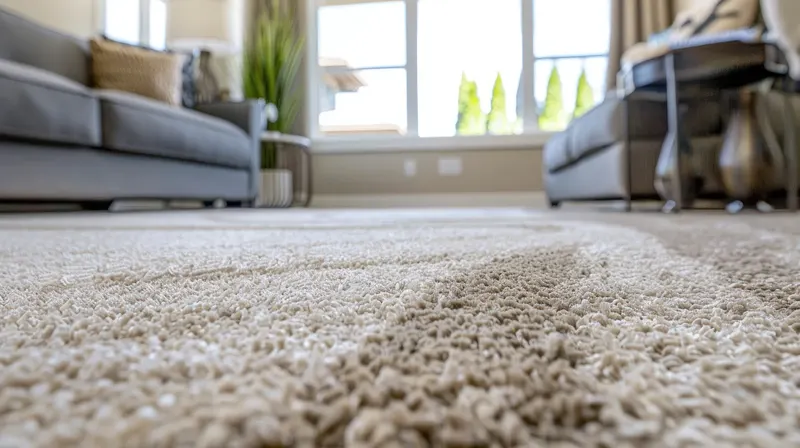
The indoor half of the problem, and what we do about it
Nobody can clean the outdoors. What you can do something about is the indoor share, the dander, dust and fine pollen that settle into carpet, rugs and the sofa and sit there on a still day when nothing outside is releasing anything.
Our answer is a low-moisture clean built for exactly that. The technician reads the cleaning code on each piece before anything starts, because the same process has to be safe on a W-code nylon carpet, an S-code sofa that wants solvent only, a WS blend and the X-code delicate fabrics most cleaners will not touch. Very little moisture goes down, the solution is worked through the fiber, and the soil is lifted out. A carpet cleaned that way stays cleaner about three times longer, because nothing sticky is left behind to catch the next month of pollen.
The anti-allergen treatment rides inside that clean. It is measured into the solution, it is non-toxic, and it is safe for children and pets to be around as soon as the floor is dry. The technician who applies it is a LocalPro employee, and he is trained on this process before he ever works in a house on his own.
Ninety percent at breakfast, fifty-six by mid-afternoon
NOAA keeps a relative-humidity table for Chattanooga covering 1948 through 2018, and it takes the air twice a day. The two columns tell separate stories, and only one of them ever gets repeated.
| Chattanooga | Morning | Afternoon |
|---|---|---|
| April | 82% | 48% |
| July | 88% | 56% |
| September | 90% | 56% |
| October | 89% | 53% |
| Whole year | 85% | 55% |
The annual pair hardly separates us from anywhere else in the region, and anybody selling Chattanooga as freakishly muggy is selling. What deserves attention is the daily drop. Air close to saturation at dawn has shed thirty points or better by three in the afternoon, day in and day out, and every soft thing in the building rides that cycle: the carpet, the sofa, the mattress, the rug by the front door. They take water on overnight and hand it back after lunch.
Dry weather in this valley does not mean dry air, and that catches out people who moved here from somewhere flat. Whatever goes into the fiber in the morning has to come back out before the technician leaves. Our equipment lifts the solution back out on the same visit.
What an hour is actually worth in a valley like this one
Here is the join nobody in this market makes out loud. Drying has less to do with heat than with whether the air touching the fiber has any capacity left to absorb water, and at 90 percent it has next to none. Carpet soaked at nine on a September morning waits for the afternoon before much of anything happens to it. In a shut-up house with the cooling cycling on and off, it can wait the entire day.
Our equipment sidesteps that wait. It puts down a measured amount of solution, works the soil loose and lifts both back out before the technician leaves, so a room is back in service about an hour after we finish. How that is done, and how it stacks up against the wetter way of going about it, is laid out in our low-moisture guide, so the mechanics can stay there. The point for this page is time. A short damp window gives dust mites less of what they thrive on, and gives a room less opportunity to pick up the flat, sour note it gets from staying wet between breakfast and dark.
Where this page stops. If there is water lying on your floor as you read this, we are not the right phone number. A restoration outfit should dry the building first. When that is done, we will come and clean the carpet, and saying so plainly seems better than pretending otherwise to win a booking.
Ragweed, the yellow film, and the first frost
A Chattanooga allergy practice keeps the local calendar, and it is longer than most people would guess.
| Season | What is in the air | Local window |
|---|---|---|
| Trees | Oak, maple, birch, cedar, hickory | Late February to May |
| Grasses | Bermuda and timothy | June to August |
| Weeds | Ragweed, chiefly | Late August into November |
| Indoors | Dust mites, mold spores, pet dander, pest allergens | No season at all |
The autumn end of that is ragweed. One plant releases billions of grains light enough to carry for miles, the season opens around August and runs six to ten weeks, the peak falls in the middle of September, and it finishes when frost kills the plant off. The average October around here brings a single night at freezing, and November brings nine. In a soft autumn, ragweed is still working here long after Halloween.
The yellow film on the porch rail is a red herring, and a useful one. The visible stuff is heavy pollen, the sort that falls near whichever tree produced it, while the wind-carried grains most allergic people respond to are too fine for the eye. So the film says very little about the air you are breathing. It says plenty about what is coming through the door on the bottom of a shoe.
And that is the second half of any September job here, because this valley does not hand you plain dust. The dirt that comes in on a shoe here carries grit, and it grinds at the pile while it colors it. The whole of that argument, and the reason our first pass is a dry one, sits in the guide to dirt and grit in Chattanooga carpet.
A September plan for the house
Leave the windows shut at dawn
Opening up on a 90 percent morning invites ragweed in and removes almost no moisture. Let the cooling system do that work instead, since it wrings water out of the air as a side effect of running.
Air the place out after lunch
The back half of the day is the dry half, down near 56 percent. If a room wants fresh air, that is the hour for it, and the same goes for drying anything you have washed.
Open the doors on rooms nobody uses
A guest room or a bonus room shut all week never gets the afternoon side of the cycle. Conditioned air needs a path into it, or the carpet in there stays the dampest thing you own.
Take the early appointment
Booked first thing, the floor is long dry before the house closes up for the night. Call 423-284-0493 and mention which room the sneezing starts in.
What having it done properly gets you
Three rooms of carpet start at $109, with 450 square feet the ceiling across the three, and every visit starts at $99. The anti-allergen treatment is an add-on measured into the solution, so it reaches the bottom of the pile, down where the dander and the fine pollen settle, and what it does is set out on our allergy treatment page.
| Line | Starting at | Notes |
|---|---|---|
| Three rooms of carpet | from $109 | 450 sq ft in total |
| Allergy treatment | typically $20–$30 a room | Visit starts at $119 with this add-on |
| Antibacterial sanitizer | typically $20–$30 a room | Visit starts at $119 with this add-on |
| Area rugs, any fiber | from $1 a sq ft | Done on your own floor |
| Stairs | typically $40–$50 | Per flight |
The rug rate does not move for fiber. Wool, silk, an Oriental handed down twice: the technician reads each one before he touches it, works it where it lies, and none of it leaves the building. Call 423-284-0493, or text 423-284-0493 a photograph of whichever room worries you and somebody will tell you what it takes. Whatever the visit turns out to be, you see the full figure on paper before anything is switched on. Love the clean or it's free, on every line of it.
Questions people here ask about pollen and damp air
Does the anti-allergen treatment go on before or after the carpet is cleaned?
During it. The treatment is measured into the cleaning solution rather than misted over the finished carpet, so it travels down to where dander, dust and the fine wind-carried pollen actually settle, at the base of the pile, and comes back out with the soil. It is non-toxic, and children and pets can be back on the floor as soon as it is dry. The same low-moisture process carries it onto upholstery and area rugs, and the technician reads the care tag on each piece first, because a solvent-only sofa and a nylon hallway are not cleaned the same way. It typically adds $20 to $30 a room.
Why does September matter more than April for a carpet here?
Because of what the air is doing. The NOAA record has mornings around Chattanooga sitting at 90 percent in September, the highest reading on the whole table, easing to 56 percent by the middle of the afternoon. April mornings start at 82. Ragweed hits its peak in the same weeks and will not stop until frost. So the dampest mornings of the year land on the busiest weeks of the pollen year, and that is the one stretch where a floor left wet all day genuinely costs you something.
Should the windows be open while the carpet dries?
Not first thing. Air already holding 90 percent of what it can carry has almost no room left for the water in your carpet, so an early window does very little for a damp floor and lets ragweed in while it fails. The air conditioning is the better tool, because it takes moisture out as it cools. Later in the day the outside air is nearer 56 percent and a window earns its place, though a floor cleaned our way has been dry for hours by then.
Does the yellow dust on the porch rail end up in the carpet?
Some of it, on shoes and on the dog. There is a line worth knowing here: the heavy visible pollen is the sort that drops close to the tree that made it, while the wind-carried kind most allergic people react to is far too fine for anyone to see. So the yellow film tells you little about the air and a great deal about the doormat. Either way it finishes at the bottom of the pile, where a vacuum takes the loose share and leaves the packed share behind. That packed share is what our dry pass and the low-moisture clean that follows it are there to lift out.
What makes a shut-up house smell sour after a humid week?
Damp sitting in soft things, nearly always. Carpet, rugs and upholstery take water on through those 90 percent mornings and give it back when the afternoon air dries out, and a house closed up for a week never gets the second half of that trade. Old soap residue from a previous cleaning makes it worse, because it holds moisture and soil together in the fiber. A clean that puts very little water in and lifts the solution back out, on a day the place can breathe, is the answer, and ours has the room back in use about an hour after we finish.
Do I need to run fans after your technician leaves?
No. Our equipment lifts the solution back out with the soil and leaves so little water in the fiber that the carpet is back in use about an hour later, and nothing has to run overnight. If a floor is properly wet, from a burst supply line or a failed water heater, the first call belongs to a restoration company rather than to us. Once the house is dry again, we will come and clean the carpet.
Back on your floor before lunch is over.
Low-moisture deep clean, dry in about an hour · Love the clean or it's free.