
Last updated: September 2026
Pet stains and odor: what actually works
A spot that still smells after you cleaned it is a chemistry problem, not a scrubbing problem. Dried urine leaves salt and protein bonded low in the fiber, and only an enzyme takes those apart. Our technician finds the marks with an ultraviolet lamp before anything is treated, works every one of them, and the job carries a 100% pet odor removal guarantee.
- The first ten minutes beat any product. Lift, blot with cool water, weight it down, and keep every kind of heat away from it.
- Walk the room in the dark with an ultraviolet lamp before you decide anything. A glow is a place to check, no more than that.
- Clean only the surface and the salt stays put. Salt pulls moisture out of the air, and the smell switches back on.
- Enzyme treatment digests the source, and the low-moisture pass behind it carries salt and soil out together.
The first ten minutes decide most of it
Almost every permanent pet mark we see was made worse in the hour after it happened, usually by somebody trying hard. Rubbing splays the fiber and leaves a fuzzy gray patch that never matches the carpet around it again, and heat cooks protein into the pile. Both are avoidable.
Lift, do not press
Take the solid part off with a folded paper towel, scraping inward from the outside edge so you are not spreading it. Pressing pushes liquid sideways and down, the direction you least want it going.
Cool water, and not much
Pour a small amount of cool water onto the mark. Warm water sets protein in exactly the way it sets an egg on a pan, so the temperature is doing real work here.
Blot with weight
Stack six or eight towels on the spot and stand on them for a minute. Swap in dry ones until a fresh towel comes up almost dry, then leave a weighted stack overnight.
Judge it dry
Wet carpet always looks ruined. Give it a day, vacuum, then decide whether anything is left. Half the spots people call about have already gone.
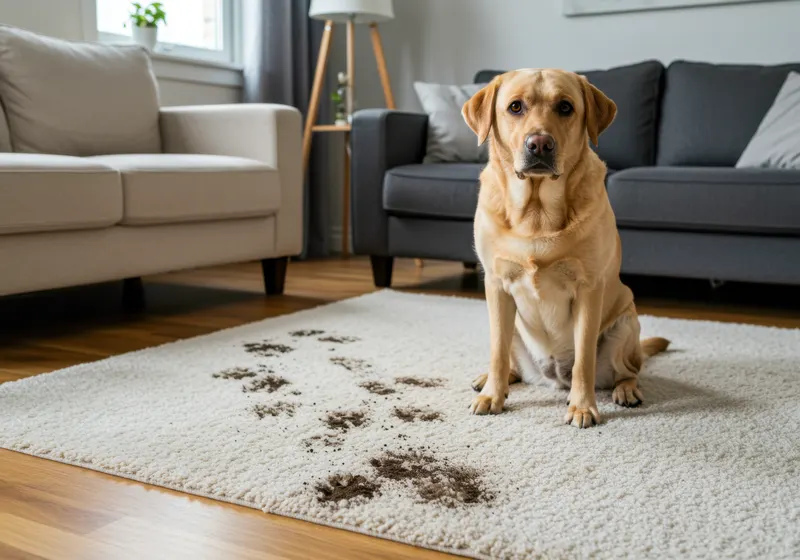
What a blacklight actually shows
Dried urine fluoresces a dull yellow-green under ultraviolet light, and a fresh accident barely shows at all, which surprises people. The compounds that glow concentrate as the water leaves, so the older mark is the brighter one. A lamp is a tool for finding history.
Be honest about what else lights up. Lint, dried drinks, residue from an old cleaning and the optical brighteners in some carpet all glow, so a bright patch is only a place to investigate. Confirm it by hand and nose at the base of the pile, where dried urine leaves the fiber stiff and the smell is sharper an inch off the floor.
Watch the shape as well. Liquid spreads outward as it sinks, so a coin-sized mark at the surface is often a dinner plate down at the backing. A treated area gets drawn wider than the glow for that reason, and a quick dab at the visible circle misses most of it.
The lamp misses things as well. Dark or patterned carpet gives too little contrast to read, and in a room a cat has worked for years the whole floor glows evenly. A blacklight showing you nothing is not the same as a floor with nothing in it. Shut the blinds, kill every light, and let your eyes adjust first.
Why it smells again a week after it looked fine
Urine dries into a crystalline salt, and salt is hygroscopic, which is a long word for pulling water back out of the air. Damp mornings feed it. So the room is fine at three in the afternoon and greets you at seven the next day, and the only fix that lasts is taking the salt out of the carpet.
That is the job our pet treatment is built for. The enzyme goes on wide, past the edge of the glow, and it is given the time it needs to break the salt and protein apart before a low-moisture pass lifts them out with the soil. The solution is non-toxic, so children and the dog can be back on that floor the same day. The room is dry in about an hour, and the technician doing the work is on our own payroll.
Wicking is the second reason, and it catches everybody. As a damp area dries, moisture climbs the fiber and brings dissolved residue with it, so the ring you thought you had beaten is back on the surface two days later. A surface clean lifts the color and leaves the smell underneath, waiting for the air to feed it again.
Old dried urine is a different job
Most of what we treat is old. The water left months ago, the salt crystallized in place, and bacteria have been working on the protein ever since, which is where that ammonia edge in an unused bedroom comes from. Age does not make a spot impossible, but it does change the work: more solution, longer dwell time, and sometimes a second application on an area that is genuinely saturated.
There is one honest limit worth knowing before you spend money. If urine sat long enough to strip the dye, that color loss is permanent. Cleaning takes out soil and it takes out smell, and nothing puts dye back into a fiber. The same is even truer on wool, where alkalinity moves color fast, and you will hear which of the two you are looking at before a drop of anything goes down.
Cats and dogs leave different maps
The chemistry is the same for both animals. Where you point the lamp is not.
A dog works in the open and repeats himself. Check the door he waits at, the run between that door and his bed, and the three feet of floor he keeps choosing. One accident is usually four or five overlapping marks by the time it bothers anyone, and they are wide, shallow and easy to find.
A cat hides it and sometimes aims at the wall. Sweep the bottom six inches of baseboard and the back edges of furniture legs, then take the lamp into the laundry corner, the strip behind a door that normally stands open, and the edge of the closet floor. Cat urine is concentrated enough that one small mark scents a whole bedroom. A cat that has quit using the box is telling you something a carpet cleaner cannot fix, so mention it to your vet.
The grit under the spot changes the order of work
Pet marks land in walkways, and a walkway holds more than loose dirt. It holds dry grit as well. Paws and shoes carry it to the carpet, where it settles at doorways and along the run to the bed.
So the order of operations matters. Wet that grit before you lift it and it becomes a slurry that sinks into the carpet, and a stiff brush on wet fiber cuts the pile rather than cleaning it. Vacuum dry and slow, in both directions, before any liquid goes near the mark. We work the same way on a job, dry first and moisture second, for exactly this reason; there is a longer version in our guide to dirt and grit in Chattanooga carpet.
That is the order our technician keeps on every pet job: a slow dry pass to lift the grit, the lamp walk to map the marks, the enzyme with time to work, and then the low-moisture lift that carries salt and soil out together. It is a deeper clean than a surface pass. The room stays cleaner about three times longer, and there is nothing in it a child or a dog cannot lie on an hour later.
What the treatment involves when DIY runs out
Pet work attaches to a cleaning, so it sits alongside the rooms on the same ticket. Past DIY, the job moves to our pet treatment, typically $30 to $40 a room.
| What | Starting at |
|---|---|
| Carpet, three rooms in one visit, up to 450 sq ft | from $109 |
| Pet treatment, per treated room | typically $30–$40 |
| Any visit with pet work on it | from $149 |
| Sofa the dog sleeps on | from $140 |
| Mattress, queen | from $140 |
| Area rug, any fiber, cleaned where it lies | from $1 / sq ft |
The lamp walk comes first and the figure is written down after it, so the rooms on that list are the rooms that actually lit up. The animal has his room back the same afternoon.
When to stop and call somebody
- The smell fades and then comes back, which means salt is still down there.
- You can feel stiff, crunchy fiber at the base of the pile when you press.
- More than one or two marks show under the lamp, or they overlap.
- The accident is older than a few weeks, or it belongs to a pet that has already passed.
- It landed on a wool or silk rug, where the wrong product costs you the color. Our rug care guide covers that side of it.
Call 423-284-0493 with the animal, roughly how old the mark is, and how many rooms are involved. That is enough for a straight answer about what comes out.
Prefer to write it down? Text 423-284-0493 instead. Somebody answers six days a week, and we hold 4.9 stars across 510 Google reviews.
Questions people ask about pet spots
What should I do in the first ten minutes after an accident?
Lift the solid part off without pressing down, then pour a little cool water on the mark and blot it with a thick stack of towels. Stand on the towels for a minute, swap in dry ones, and keep going until they come up nearly dry. Leave warm water and the hair dryer alone, because heat sets protein into the fiber and turns a spot into a permanent one. Then walk away and look again once it is dry, since wet carpet always reads worse than it is.
Does a blacklight ever glow on something that is not urine?
Often. Lint, spilled drinks, leftover cleaning residue and the brighteners built into some carpet all fluoresce under ultraviolet light, so a glowing patch is a place to check rather than proof of anything. Press your hand into the base of the pile. Dried urine leaves the fiber stiff and a little crunchy down low, and the smell is far stronger an inch off the floor than it is at standing height. Our technician walks the room with you so you see what lit up and what did not.
Why does a spot I blotted out come back brown a few days later?
That is wicking. The liquid traveled deeper than your towel reached, and as the area dries the leftover moisture climbs back up the fiber and carries dissolved residue to the surface with it. You cleaned the top and the bottom refilled it. The answer is to pull moisture out. A low-moisture machine does that, and it is why a second round of your own water usually widens the ring.
Which household mixes make a urine spot worse?
Ammonia is the one to skip outright, because it reads as urine to a dog and invites him straight back to the same place. Heat of any kind sets the protein, so warm water is working against you. Vinegar knocks the smell down for a day or two and does nothing at all to the salt underneath. Bleach and oxygen boosters can strip the dye and leave a pale patch where the dark one used to be, which is a harder problem than the one you started with.
How many spots does a one-dog house usually have?
More than the owner expects. A dog returns to a place that still smells right to him, so one accident near the back door is often four or five overlapping marks inside the same three feet by the time anyone picks up the phone. The ultraviolet walk settles it. Some houses light up across two rooms and some light up in one corner, and nothing gets treated that the lamp did not find.
Does the smell coming back mean the treatment failed?
It means we come back out. Pet work here carries a 100% pet odor removal guarantee, so if a smell we treated turns up later, the return visit costs nothing. In practice those calls are nearly always a mark the first visit never located rather than one that refused to respond. The lamp comes out before the price does. Badly saturated areas that have sat untreated for years sometimes want a second application, and you hear that at the door.
Back on your floor before lunch is over.
Low-moisture deep clean, dry in about an hour · Love the clean or it's free.