
Last updated: September 2026
Low-moisture vs steam cleaning: an honest comparison
Both methods clean carpet. The difference is water. Hot-water extraction soaks the pile and pulls most of it back, while our machines use a fraction of that. The bigger difference is what each one leaves behind: ours takes the soil out and leaves the fibers bare.
- Hot-water extraction is a real method with real strengths. Anyone calling it a trick has something to sell you.
- The trade is water: a soaked pile can still feel cool underfoot at bedtime, and ours is back in use inside the hour.
- What brings the gray lane back is the soap left in the carpet.
- The dirt tracked in here is gritty, so the first pass on any carpet should be a dry one.
Two machines, two different ideas
Hot-water extraction heats water, mixes detergent into it and drives it into the carpet under pressure, while a vacuum slot on the same wand pulls back what it can. Most of the country calls it steam cleaning. What leaves the wand is hot water rather than vapor, and the name is a holdover nobody bothered to correct.
Low-moisture cleaning starts from the other end. A measured amount of solution goes onto the fiber, it is given time to break the soil loose, the pile is worked mechanically, and the suspended soil comes back out with very little liquid left behind. Same four jobs, a different route through them, and neither one is magic.
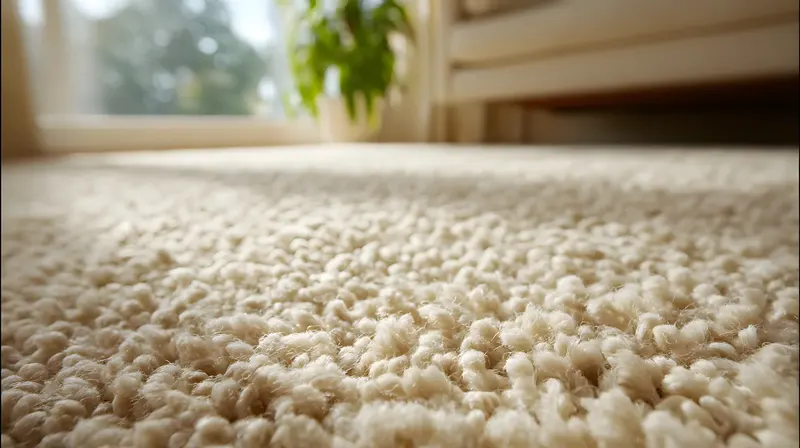
Water, dry time and residue, side by side
Stripped down to what a homeowner actually feels, it looks like this.
| Hot-water extraction | Our low-moisture clean | |
|---|---|---|
| Water onto the carpet | Heavy, under pressure, several passes | A measured spray on the fiber tips |
| Where it ends up | Some of it below the vacuum's reach | Held near the surface, lifted back out |
| Until you can walk on it | Hours, and often most of a day | About an hour |
| What the fiber keeps | Depends entirely on the rinse | Bare fibers, nothing coating them |
| Strongest at | Flushing a heavy grease load | Household soil, a deeper lift, fast turnaround |
What actually gets a carpet clean
Ask a chemist and you get four levers. Water volume is not one of them; it is just the vehicle.
The right solution
Something that breaks the bond between soil and fiber. Ours are non-toxic and safe for kids and pets, because people lie down on this floor.
Time to work
Chemistry needs minutes. A technician who sprays and pulls in one movement is fighting the carpet.
Mechanical agitation
Soil has to be knocked physically loose from the fibers. A wand on its own cannot do it, so ask any cleaner about agitation.
Getting it back out
Suspended soil has to leave the room. Do this part badly and the carpet looks fine wet and disappointing dry.
Both methods can tick all four. A good extraction operator who pre-treats, waits, agitates and rinses properly will beat a lazy low-moisture job every time. Method is the argument people have online; craft decides how your floor looks.
Why an hour matters
A carpet still damp at bedtime is where a musty smell starts, and a shut-up house does nothing to hurry it along. Our equipment puts down a measured amount of solution and takes it back out with the soil before the technician leaves, so the floor is walkable in about an hour and nothing is left to sit wet overnight.
Residue is what brings the gray lane back
Six weeks after a cleaning the path from the kitchen to the couch starts going gray again, and everyone blames the carpet. Usually it was the last cleaning. Detergent that never fully rinsed out dries down into a tacky film, and every shoe crossing that lane hands its dirt straight to the film.
This is a rinse problem rather than a method problem. Extraction with a thorough rinse leaves very little; the same machine run fast and heavy on soap leaves a lane that re-soils quicker than before anyone touched it. Our solutions come back out along with the soil, and a carpet cleaned without soap in it stays looking right roughly three times as long.
What hot-water extraction is genuinely good at
Volume flushes. A carpet carrying a heavy grease load, or one cleaned with cheap soap a dozen times and holding years of film, responds well to being soaked and rinsed hard. There is no honest way around that, and we are not going to pretend otherwise to win an argument.
A dense commercial loop also tolerates that much water far better than the cut-pile carpet in most family homes does. The catch is the second half of the job: whoever puts the water down has to get it back out and dry the room fast, and that is the half most operators rush.
One line we will not cross. If a carpet is wet right now from a burst supply line, a failed heater or an appliance, that is not a cleaning job yet. A restoration company dries the structure, and that is their trade. Once the house is properly dry, call us and we will clean the carpet. You will hear that on the phone before you hear a booking time.
The grit problem, and why our first pass is dry
The dirt arriving at a door anywhere around Chattanooga is abrasive before it is anything else, and neither machine has an answer for grit once it is down at the backing.
So the order of operations matters more here than the method does. The pass that counts happens before a drop of liquid goes anywhere near the floor, because wetting that material first turns it to slurry and sends it down. Our write-up on dirt and grit in Chattanooga carpet goes further into the soil itself.
Who is running the equipment matters as much as the equipment
Every technician who cleans for us is our own employee, trained on this process. They read the fiber before anything starts, they match the solution to the cleaning code on the tag, and they know the difference between a carpet that wants a second pre-treatment and one that wants a gentler solution. That is the half of the job a method argument never covers, and it is the half that decides how your floor looks six weeks on.
What the visit includes, either way
Our rate does not move with the method, because we run one. Three rooms start at $109 with a 450 square foot ceiling across them, and every line below is published.
| On the price sheet | Starting at |
|---|---|
| Three rooms, 450 sq ft the ceiling | from $109 |
| A fourth room, and a fifth | typically $40–50 |
| One oversized space instead of two rooms | typically $50–100 |
| A hallway, whatever length it happens to be | typically $20–30 |
| Carpeted stairs, charged by the flight | typically $40–50 |
| Any area rug, any fiber, done on your floor | from $1 / sq ft |
| Pet treatment, on the room that needs it | typically $30–40 |
| A visit with pet work on it | from $149 |
| Every visit, however small | from $99 |
Pet spots a normal clean will not settle move onto our pet treatment, which uses an enzyme to digest the salt and protein a normal clean rinses straight over, with a 100% pet odor removal guarantee sitting behind it. The carpet cleaning page walks through how the visit itself runs, and the pollen and humidity guide covers keeping a carpet fresh through spring.
So which one should you book?
On a restaurant loop carpet with fryer grease worked into it, more water and a hard rinse is a reasonable call, and a careful operator will do right by you. In a Hamilton or Catoosa County house with cut-pile carpet, a dog and a school run, the newer equipment wins and it is not close.
We picked our side of that years ago because of the floors we actually walk into here. The figure is agreed at your door before work starts, and love the clean or it is free. Somebody answers 423-284-0493 from 8 AM to 6 PM, Monday right through Saturday. Texts go to 423-284-0493.
Questions people ask before they pick a method
Does a steam machine actually make steam?
No. What leaves the wand is hot water under pressure with detergent in it, and it lands on the carpet as water. The name stuck a long time ago and never came off. It matters because water is what your floor has to give back over the next several hours.
Which method leaves more water down in the carpet backing?
Hot-water extraction, and not by a little. It works by soaking the pile and vacuuming most of it back, so whatever the vacuum misses keeps going down. We wet the top of the fiber and lift the solution back out with the soil, which is why the floor is dry in about an hour.
My carpet has been cleaned with soapy machines for years. Where does that leave me?
Usually with a dried film sitting in the carpet, and film is what pulls new dirt in fast. Our technician pre-treats those carpets twice and works the lanes slower to get the old soap moving. Carpet cleaned without soap left in it holds its look about three times longer.
Why vacuum a carpet around Chattanooga hard before anything wet touches it?
Because the dirt tracked in here carries grit. Wet that grit first and it turns to slurry and rides down to the backing, so it comes out dry or it does not come out.
Does using less water mean a shallower clean?
The opposite, done properly. Water is only the carrier. What gets a carpet clean is the solution, the minutes it is given to work and the agitation that breaks soil off the fibers, and our equipment does all three before the small amount of moisture comes back out with the dirt. A heavy soak moves soil around; it does not lift more of it.
Do you charge more because you use less water?
No. Three rooms start at $109 with a 450 square foot ceiling across them either way, rooms after that typically run $40 to $50, and every add-on is priced on paper before a single piece of kit is unloaded. Most companies in this market publish no price at all and quote you over the phone, which is the part actually worth comparing.
Is there a job where a heavy wet clean is the better call?
Yes, and we will say so out loud. Carpet loaded with cooking grease or with years of old detergent responds to a heavy flush, and an operator who can dry that room quickly gets a good result from it. In a house on a Hamilton County ridge, with dogs, cut-pile carpet and a family that wants the room back tonight, the arithmetic runs the other way.
Back on your floor before lunch is over.
Low-moisture deep clean, dry in about an hour · Love the clean or it's free.